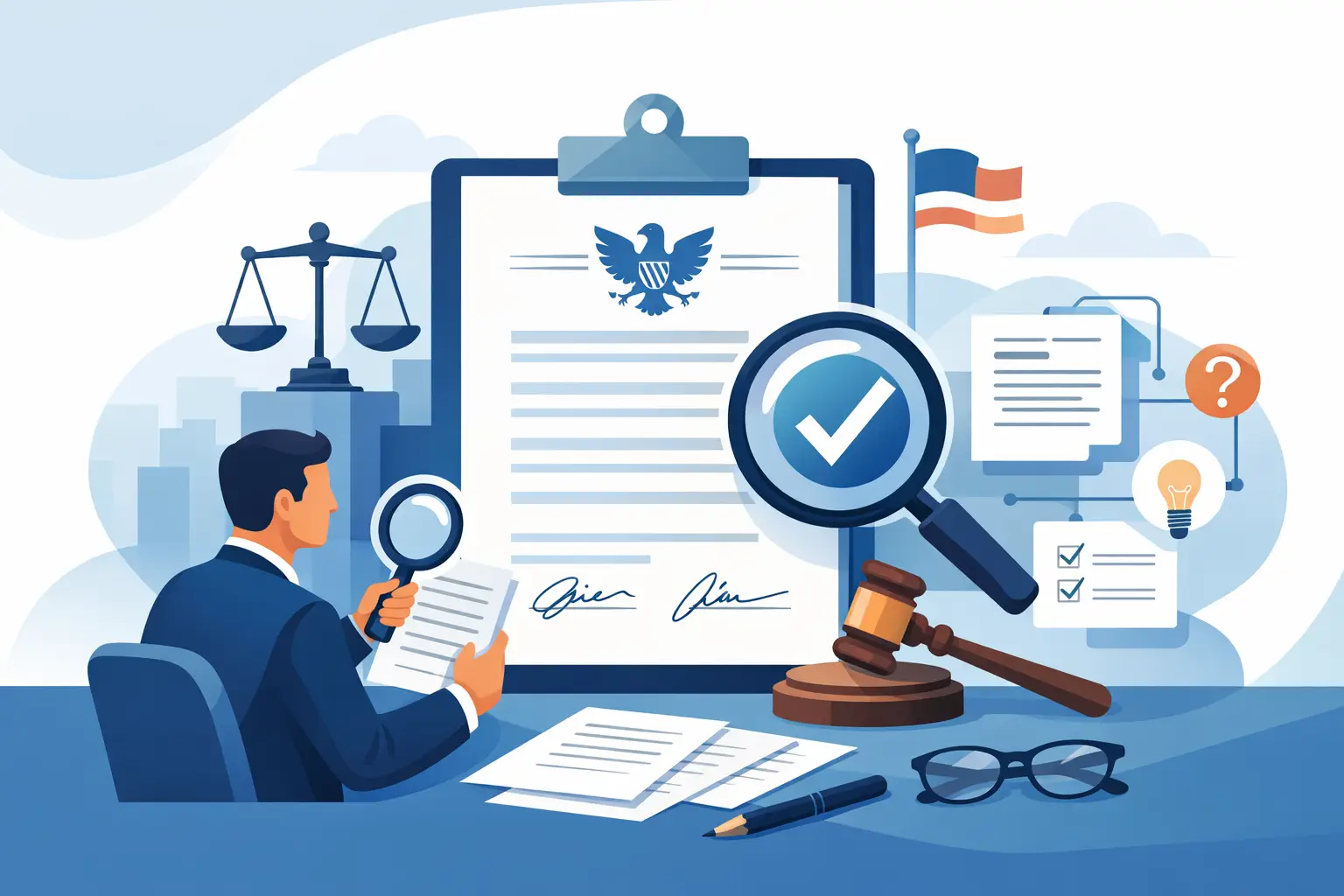
An executive order can look definitive on first read. The title is formal, the language is commanding, and the signature at the bottom suggests immediate action. But if you want to understand what an order really does, how to read executive orders means separating the headline effect from the legal effect.
That distinction matters because executive orders are often treated as self-executing political events when they are really administrative instructions with limits. Some change agency behavior quickly. Some mainly signal priorities. Some get tied up by existing law, budget constraints, union rules, court challenges, or the simple fact that a mayor, governor, or president cannot order powers they do not legally possess.
What an executive order is, and what it is not
An executive order is a written directive from the head of the executive branch to agencies or officials under that branch's authority. At the local level, that may mean a mayor directing city agencies. At the state level, it usually means a governor directing state agencies. At the federal level, it means the president directing federal executive departments and related officials.
What it is not is a law passed by a legislature. That sounds basic, but it is the first checkpoint in any serious reading. An executive order cannot usually create brand-new legal authority out of thin air. It works best when it uses authority that already exists in a charter, statute, regulation, emergency power, procurement rule, or management authority over executive agencies.
That is why two executive orders with similar rhetoric can have very different practical weight. One may rest on clear statutory authority and produce immediate operational change. Another may depend on later agency rulemaking, future funding, or cooperation from entities the executive does not control.
How to read executive orders without getting lost in the language
Start with the issuing authority. Before you analyze a single clause, identify who signed it and what office that person holds. A president, governor, and mayor each operate in different legal systems. Even two mayors may have different powers depending on their city charter.
Next, read the opening findings carefully. These are the "whereas" style statements or background clauses that explain why the order is being issued. Readers often skip them. That is a mistake. Those clauses usually tell you what legal theory or factual justification the executive is relying on. If the order cites an emergency, a statute, a charter provision, or a prior declaration, that is your first signal about how durable the order may be.
Then move to the operative section, not just the preamble. The operative section is where the order actually tells agencies to do something. Look for verbs such as "shall," "must," "directs," "requires," "authorizes," or "prohibits." Those words matter more than the broad policy language. If the order says an agency is "encouraged" to act, that is weaker than a mandatory direction. If it orders a review, report, or plan rather than an immediate policy change, the practical result may be slower and less certain than the announcement suggests.
A useful test is simple: who has to do what, by when, and under what authority? If you cannot answer those four questions after reading the order, you do not yet know what it does.
The four parts that carry the most weight
Most executive orders can be read through four accountability questions.
First, what problem is the order claiming to address? Sometimes the problem statement is narrow and measurable. Sometimes it is broad and political. A narrow problem statement tends to produce a narrower, more enforceable order.
Second, what authority is being invoked? This is the legal spine of the document. If the order names specific statutes, charter sections, or emergency powers, that is a stronger starting point than vague references to the public interest.
Third, what mechanism is being used? An order may direct agency heads, set internal procedures, freeze hiring, require reporting, change procurement practice, create a task force, or reinterpret enforcement priorities. The mechanism tells you whether the order is mostly managerial, regulatory, symbolic, or emergency-driven.
Fourth, what is the implementation path? Does the order take effect immediately? Does it require agency rules, budget action, interagency coordination, labor negotiations, or new data systems? This is where many flashy orders weaken under scrutiny. A signed order is not the same thing as completed implementation.
Watch for legal limits hidden in plain sight
The fastest way to misread an executive order is to assume the signature resolves all barriers. It does not. Executive action is constrained by existing law, court precedent, appropriations, collective bargaining agreements, due process rules, and the basic structure of government.
If an order touches spending, ask whether funds are already available. If it creates a new office or program, ask whether the executive can do that administratively or whether legislative approval is required. If it affects private actors rather than government agencies, ask what enforcement mechanism exists. If it appears to conflict with statute, the statute usually wins unless the order is interpreting a gray area within delegated authority.
This is where careful readers separate governing from messaging. A forceful order may still be legally narrow. A technical order may turn out to be highly consequential because it changes internal procedures across multiple agencies.
How to read executive orders in context
No executive order should be read in isolation. Read it against the government structure around it.
At the city level, for example, ask whether the mayor is directing agencies they directly control or trying to pressure independent actors, authorities, or elected officials outside that chain of command. In a strong-mayor system, some directives can move fast. Others still run into the City Council, the budget process, or state law.
At the state and federal levels, the same principle applies. Executive control is real, but it is not unlimited. If an order depends on appropriations, rulemaking, or enforcement choices by agencies with procedural obligations, the timeline may stretch well beyond the press cycle.
This is also why date stamps matter. An order issued early in an administration may set long-term priorities for staffing, procurement, and reporting. An order issued during a crisis may rely on temporary emergency authority and expire or weaken once the emergency basis changes.
Red flags, loopholes, and weak spots
Some orders are written broadly on purpose. That does not make them meaningless, but it does change how you should read them.
Be cautious when the order announces values but gives few operational commands. Be cautious when deadlines are missing, when responsible agencies are not named, or when the order depends on future plans, recommendations, or assessments with no enforcement mechanism. Also watch for exceptions tucked into later sections. A strong rule in section one can be narrowed substantially by carveouts in section five.
Definitions matter too. Terms like "as feasible," "subject to applicable law," or "to the maximum extent permitted" are common and often appropriate. But they also signal flexibility, which can mean either practical realism or a soft commitment.
That does not make the order bad. It means the order is not the end of the analysis.
What to check after the order is signed
The real accountability question is not whether an executive order exists. It is whether government behavior changed.
After reading the text, track the implementing agency or agencies. Did they issue guidance? Did they change forms, rules, enforcement priorities, or reporting structures? Was money moved, staff assigned, or compliance data published? Were there legal challenges? Did inspectors general, comptrollers, legislative bodies, or watchdog outlets flag implementation gaps?
This is where a document-based approach matters. ReviewMamdani.com is built around that basic principle: government actions should be tracked as measurable accountability items, not just announcements. The same standard applies to any executive order. If there is no trace of implementation, the order may be more signal than substance.
A practical reading method you can use in five minutes
If you are short on time, use a disciplined skim. Read the title, issuing authority, cited legal basis, operative verbs, deadlines, named agencies, and effective date. Then ask one final question: what would be visibly different in government next week if this order were fully followed?
If the answer is clear, you probably understand the order's core function. If the answer is vague, the order may be aspirational, procedurally incomplete, or dependent on later action.
The point is not to become a lawyer before breakfast. It is to read executive power the way a watchdog does - by testing claims against authority, mechanism, and implementation. That habit pays off quickly. Once you stop reading executive orders as speeches in legal formatting, you start seeing what government is actually committing itself to do.